A personal notebook about the bumblebees of Nova Scotia: four species in detail, the others in brief, how to tell them apart, and where honey comes into it. Every fact is linked to its source, and gaps are marked.
The illustrations are AI-generated artwork, not identification images. This page is for general interest only and is not an authority; for anything that matters, follow the linked sources.
Choose a bee to read about it. Three of the four illustrations are made from credited photographs of real bees; how each was made is on the About page.
The four species
Tri-coloured bumblebee (Bombus ternarius)
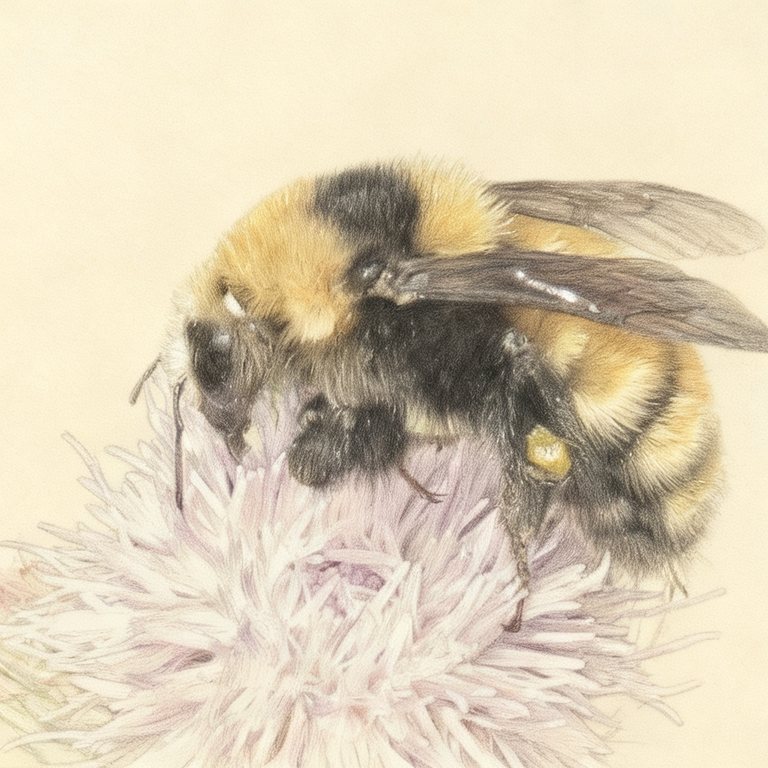
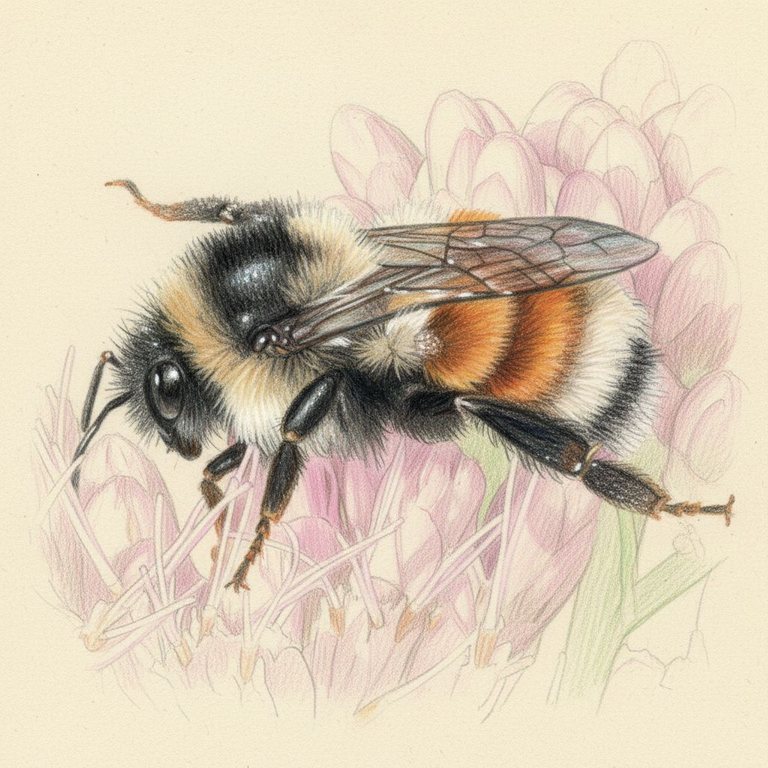
AI-generated from a photograph by Mark Nenadov (CC BY 2.0; cropped, mirrored and redrawn), so the colour pattern follows a real bee: yellow, orange, yellow, then a black tail.For comparison, a photograph of the real bee. Photo: Jacy Lucier, taken at St. Anns Bay, Nova Scotia; CC BY-SA 4.0, via Wikimedia Commons (resized).
Status
Native, and ranked secure (S5) in Nova Scotia. [12]
In Nova Scotia
Very common. A Cape Breton guide says you can find it "just about anywhere", in towns, countryside and wild places. [10] It is the most-recorded bumblebee in the province on iNaturalist, though such counts reflect where people take photographs. [16]
Milkweeds, brambles, goldenrods, rhododendrons and blueberries are among its food plants. [11]
How to recognise it
The thorax and the first segment of the abdomen are yellow, with a black band between the wings that runs back to a point; the Cape Breton guide calls it a downward-facing arrow. Then come two orange segments, one yellow segment, and a black tail. [11][10] The same guide calls it one of the easiest bumblebees to identify. [10]
Lookalikes
The red form of the red-belted bumblebee (Bombus rufocinctus) can be confused with it. In the tri-coloured the second segment is orange-red; in the red-belted it is often yellow, at least at the front. [11] A faded tri-coloured can also look remarkably like a northern amber from above. [15]
Its year
The Cape Breton guide gives a calendar for bumblebees in general: queens wake between May and June, only workers are about from mid-June to early August, and males start to appear at the very end of August. [10] For this species in Nova Scotia, verified iNaturalist sightings begin in April, climb steeply in July, peak in August and carry on through October, with a few in November. [16]
How it is doing
Well. Its relative abundance was stable from 1900 to 1960 and has risen steadily since, and no specific threats are identified for it. [12] In a 2020 Cape Breton survey, written up as a student thesis, it was found at every site and made up 43 per cent of the bumblebees counted. [14]
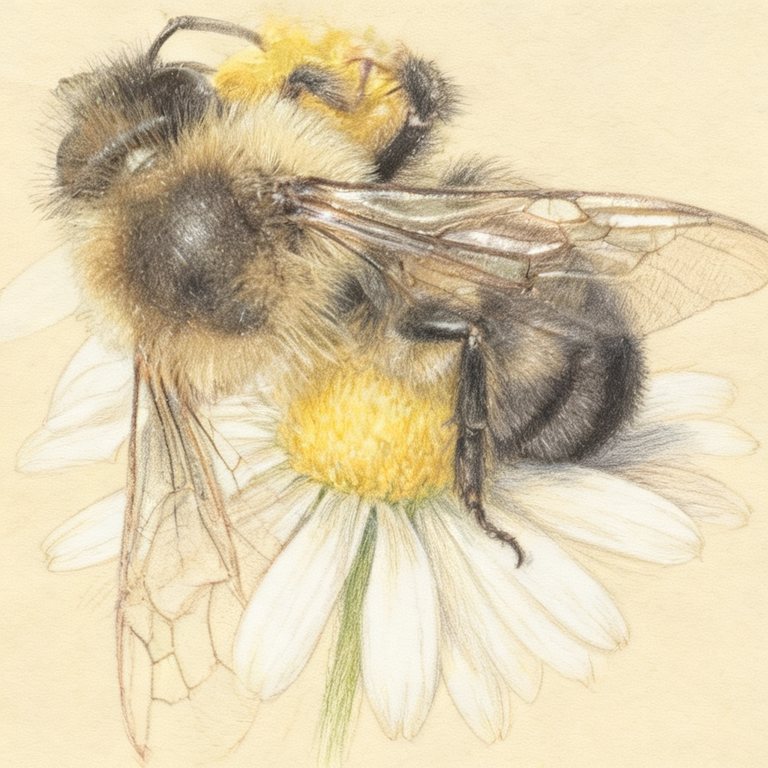
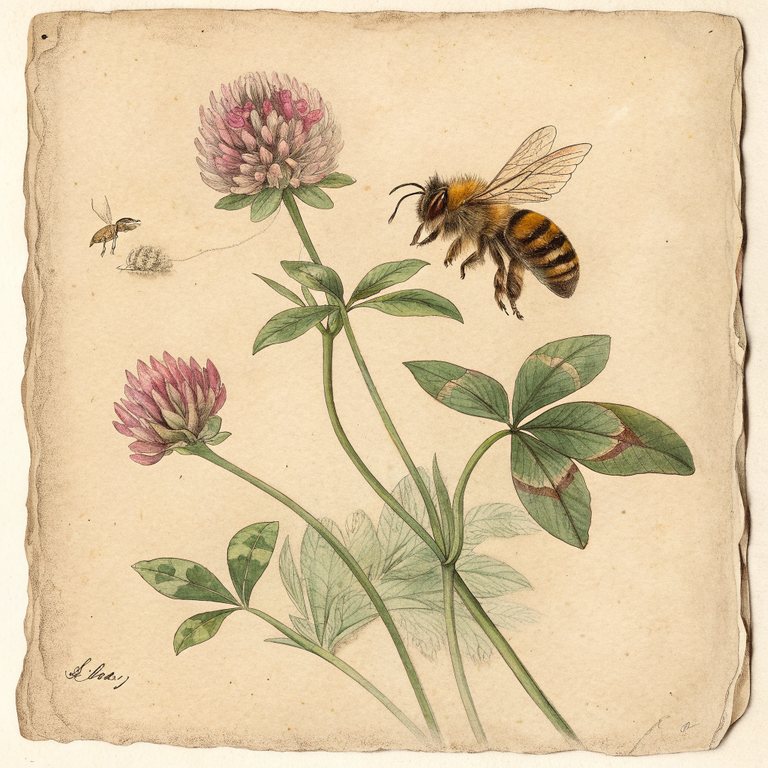
AI-generated from a photograph by mefisher (CC0; cropped and redrawn), so the colour pattern follows a real bee: a pale thorax and first segment, then black to the tail. Seen from above.For comparison, a photograph of the real bee. Photo: mefisher, CC0, via Wikimedia Commons (resized).
Status
Generally treated as introduced. Its native range in Canada is given as southern Ontario, Quebec and perhaps adjacent New Brunswick, [4] and Acadia University calls it non-native. [1] The provincial plan notes there is debate about whether it is native. [2]
In Nova Scotia
Established throughout the Maritimes, and "seemingly well established" in Nova Scotia by the early 2000s. [4] Abundant in urban and agricultural areas. [1]
Size and build
Short hair, a rather long, rectangular abdomen and a medium-length tongue. [11]
Thistles, goldenrods and pickerelweed are among its food plants. [11] Commercial colonies are brought in to pollinate lowbush blueberry and greenhouse crops. [2]
How to recognise it
In both sexes only the first segment of the abdomen has pale hair; the rest is entirely black. [4] The thorax is pale yellow with some black hairs between the wings, and females have a black face. [11]
Lookalikes
The two-spotted bumblebee (Bombus bimaculatus) is often mistaken for it. Look at the second segment: black in the common eastern, with two yellow "spots" in the two-spotted. [1][11] The two-spotted is also longer-haired, with a shorter, rounder abdomen. [11]
Its year
It runs later than the other three. Verified iNaturalist sightings in Nova Scotia start in April, build through the summer and peak in September, with many still in October and a few in November. [16]
How it got here
Commercial bumblebee colonies came into use in Canada in 1990, and by the early 1990s this species was being used to pollinate blueberries in New Brunswick. Its continued use for pollination in eastern Canada led to it establishing in the wild. Federal guidelines recommend fitting colonies with queen excluders outside the species' natural range, but the authors who traced its spread presume that was not done, or did not work, in Atlantic Canada. [4]
Why it matters
The provincial plan for the yellow-banded bumblebee says the common eastern may out-compete native bees for nest sites and food and may be a source of disease, and lists competition from it among the yellow-banded's main threats. The same plan says there is much still to learn about how disease spilling over from managed colonies affects wild bumblebees. [2] In Newfoundland, native bees or honey bees were found inside 58 per cent of the commercial colonies examined, which is one way infections could pass between them. [17]
In Cape Breton, a student thesis reports a dramatic increase in this species since the 1990s. [14]
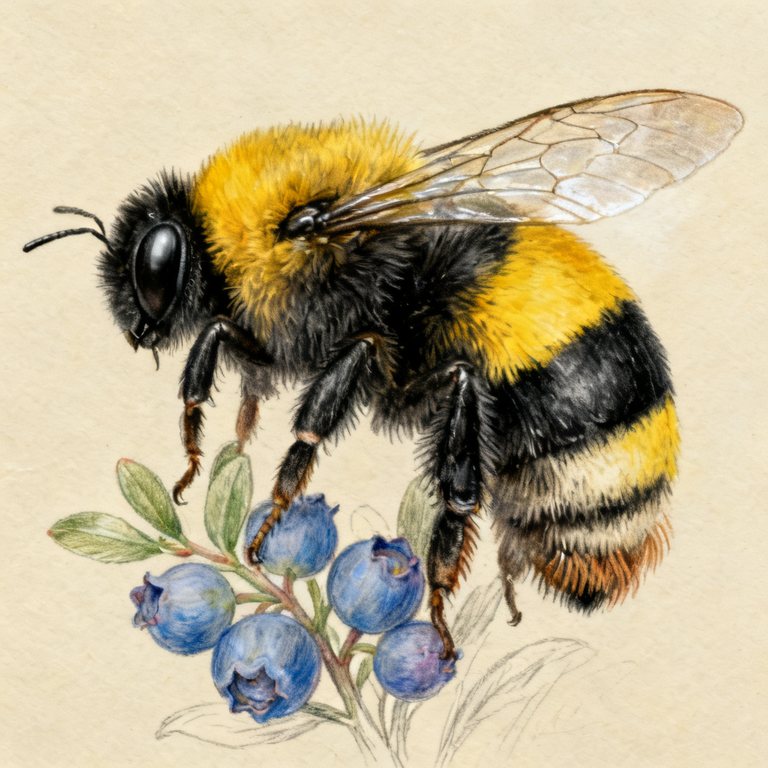
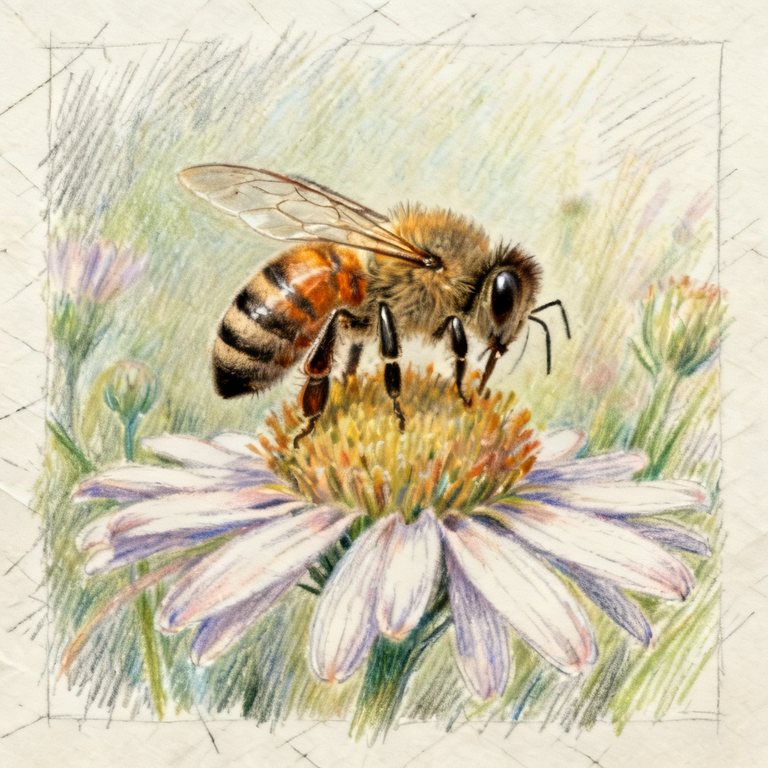
In this illustration the yellow thorax front and tawny tail fringe are right; the abdomen bands are only roughly placed.For comparison, a photograph of the real bee. Photo: Rob Foster, CC BY 4.0, via Wikimedia Commons (resized).
Status
Vulnerable in Nova Scotia (2017); Special Concern in Canada (2015). [2]
In Nova Scotia
Native and found throughout the province. More than 360 sightings were posted to iNaturalist between 2014 and 2022, from all 18 counties. [2]
Size and build
Medium-sized, with a short face and a short tongue compared with other bumblebees. [2]
Nest
Underground, often in an abandoned rodent or rabbit burrow. [2]
Food
A generalist. It needs flowers in bloom through the whole growing season. [2]
How to recognise it
Most of the upper abdomen is black, crossed by one distinctive, broad band of golden yellow on the second and third segments. The fifth segment is black or pale yellow-brown. Males look like females but usually have more yellow hair on the face. [2] Acadia University's field notes add an amber-orange tip and a fuzzy black face. [1]
What it feeds on
Flowers recorded as food plants in Nova Scotia include willows, pin cherry, apple, mayflower, brambles, lupines, fireweed, milkweeds, Joe Pye weed and several goldenrods. Its short tongue suits shallow flowers, though it can reach nectar in deeper ones by chewing a hole through the petals. [2]
Its year
Queens that have overwintered spread out in spring to look for nest sites. New queens and males leave the nest in August and early September to mate. The males and the old queen die when the cold comes, and only the newly mated queens overwinter. [2]
Why it is in trouble
This was once one of the commonest bumblebees in eastern and boreal Canada. Its decline began in the early 1990s: at many sites it had made up more than 20 per cent of all bumblebees collected, and in recent studies it is typically under 4 per cent. Declines in Nova Scotia may not be as severe. [2]
The provincial management plan names four main threats: competition for flowers from the introduced common eastern bumblebee, disease spreading from bumblebees managed for greenhouse and blueberry pollination, farm and forestry pesticides, and climate change. [2] It is also the host of the gypsy cuckoo bumblebee, which is Endangered in Nova Scotia. [6][7]
Seen one?
Photograph it and upload the picture to iNaturalist; sightings like these are how its Nova Scotia range is now mapped. [2]
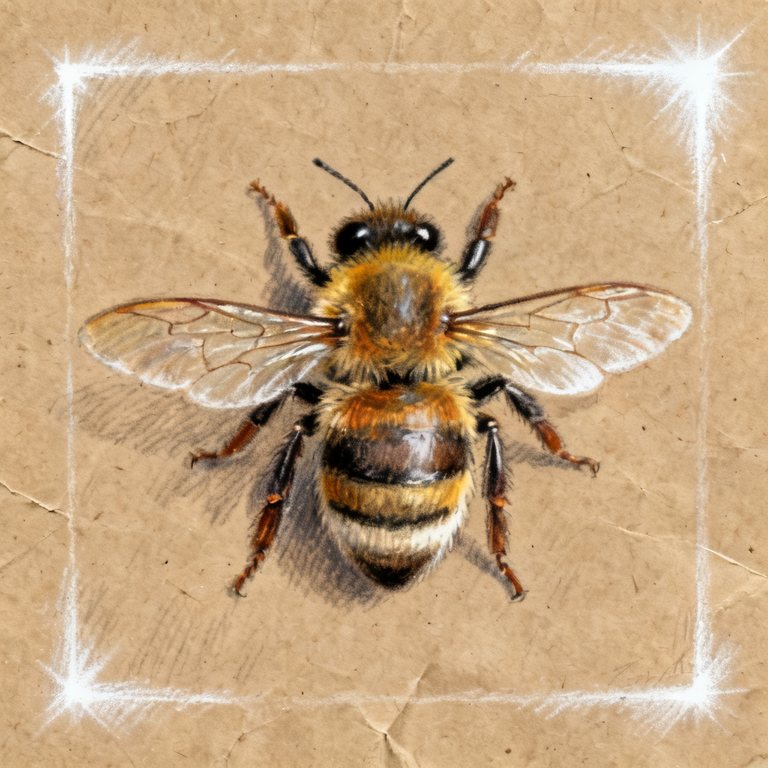
AI-generated from a photograph by Dan MacNeal (CC BY 4.0; cropped and redrawn), so the colour pattern follows a real bee: a black band between the wings, dark lower sides and a yellow abdomen. It is the same photograph shown below.For comparison, a photograph of the real bee. Photo: Dan MacNeal, CC BY 4.0, via Wikimedia Commons (resized).
Status
Native, and ranked secure (S5) in Nova Scotia. Across its range it is widespread and common, though declining in the American Midwest. [13]
In Nova Scotia
Recorded here since 1921. [8] In Cape Breton it turns up in towns and suburbs and in some rural and wild areas, generally near water: lakes, rivers and the ocean. [10]
Size and build
One of the larger bumblebees in Cape Breton, [10] with a long face and a long tongue. [11]
In Cape Breton, commonly New England aster, tufted vetch and garden bee balm. [10] Elsewhere it shows a distinct preference for vetches and clovers. [15]
How to recognise it
A yellow face, a thorax that is yellow above with a black band between the wings and usually black lower sides, and an abdomen whose first four segments are extensively yellow. The fifth segment is black or yellow. [11] The Cape Breton guide puts it more simply: a yellow face, a black band between the wings, and the rest a yellow, amber-ish colour except for the sides. [10]
Lookalikes
The golden northern bumblebee (Bombus fervidus) is the one to rule out. Check the face and the sides of the thorax: the northern amber has a yellow face and black sides, the golden northern a black face and yellow sides. [11][10]
Its year
Queens of this species become active later in the season than most other bumblebees. [13] Nova Scotia sightings on iNaturalist bear that out: none in April, a handful in May, most in July and August, and very few after September. [16]
How it is doing
Its short-term trend appears relatively stable across its range, and it is assessed as Least Concern internationally. [13]
Red-belted bumblebee(Bombus rufocinctus). Variable in colour; its red form is the tri-coloured's main lookalike. [9][11]
Golden northern bumblebee(Bombus fervidus). Native, golden-yellow and long-bodied. At Acadia University's botanical gardens it is abundant in late summer and often seen on goldenrod. [1]
Two-spotted bumblebee(Bombus bimaculatus). First recorded in Nova Scotia in 2016, as its range spread east. [5]
Indiscriminate cuckoo bumblebee(Bombus insularis). Native and rare. It lays its eggs in the nests of other bumblebees, which raise its young. [1]
Gypsy cuckoo bumblebee(Bombus bohemicus). A nest parasite of the yellow-banded bumblebee, listed as Endangered in Nova Scotia. [6][7]
iNaturalist holds verified sightings of thirteen bumblebee species in Nova Scotia. Besides those above, they are the half-black, perplexing, yellowish cuckoo, Sanderson's and lemon cuckoo bumblebees. [16] That is a count of what people have photographed and had identified, not an official checklist; the gypsy cuckoo bumblebee, for one, is not among them.
Telling them apart
Look at the abdomen first, then the face and the sides of the thorax.
Orange in the middle:tri-coloured, with yellow in front of the orange and behind it. [11] Rule out the red-belted, whose second segment is often yellow. [11]
Black with one pale segment at the front:common eastern. [4] Rule out the two-spotted, which has yellow "spots" on the second segment. [1]
Black with one broad golden-yellow band:yellow-banded, the band lying across the second and third segments. [2]
Yellow for the first four segments:northern amber if the face is yellow and the sides of the thorax black; golden northern if the face is black and the sides yellow. [11]
Life cycle
For most nest-building bumblebees, a colony lasts a single season. A queen that has spent the winter underground emerges in spring, finds a nest site and raises the first workers herself. Yellow-banded bumblebees nest underground, often in old rodent burrows. New queens and males leave the nest in August and early September to mate. Males and the old queen die when cold weather arrives; the newly mated queens overwinter alone, typically burrowed 2 to 15 cm into loose soil or rotting logs, and no queen survives a second winter. [2]
Cuckoo bumblebees are the exception. They build no colony of their own: a female invades the nest of a host species and uses its workers to raise her young. [6]
Where and when to see them
Look in open, flowery places. The yellow-banded bumblebee is a habitat generalist, found in meadows and woodland openings, parks and gardens, farmland and roadsides, visiting everything from willows to raspberries to clovers. Because a colony is active for the whole growing season, it needs flowers in bloom from spring through summer. [2] The tri-coloured is common in fields and gardens, the common eastern in towns and farmland, and at Acadia University's botanical gardens the golden northern is most abundant in late summer, often on goldenrod. [1]
Verified iNaturalist sightings in Nova Scotia by month, all years to 10 October 2026. The busiest month for each species is in bold. [16]
Species
Apr
May
Jun
Jul
Aug
Sep
Oct
Nov
Tri-coloured
130
401
355
1,428
2,312 (busiest month)
615
372
9
Common eastern
27
287
346
589
1,169
2,019 (busiest month)
695
13
Yellow-banded
8
34
72
472 (busiest month)
308
9
0
0
Northern amber
0
15
194
629 (busiest month)
524
52
6
0
Read the table for its shape more than its numbers: the counts show when people photographed each bee, so they also reflect when people are outdoors with a camera. The pattern is still clear. The tri-coloured is the first to appear in numbers and peaks in August; the yellow-banded and northern amber are bees of July and August and are almost gone by September; the common eastern peaks latest, in September, and lingers into November.
Conservation
The yellow-banded bumblebee was assessed as Special Concern in Canada by COSEWIC in 2015, listed as Vulnerable under Nova Scotia's Endangered Species Act in 2017, and added to Schedule 1 of the federal Species at Risk Act in 2018. [2] The federal management plan names four main threats: disease spreading from managed bumblebee colonies, pesticides, agricultural intensification and climate change. [3] In Nova Scotia, the introduced common eastern bumblebee may also compete with native species for nest sites and food and act as a source of disease. [2]
The gypsy cuckoo bumblebee depends on the yellow-banded as a host [6] and has been listed as Endangered in Nova Scotia since 2017. [7] ACAP Cape Breton reports that it has not been seen on the island since 2002. [7]
Honey
The honey sold in Nova Scotia is not made by bumblebees. It comes from the western honey bee (Apis mellifera), a different animal: it was introduced to North America from Europe, is not native here, and lives only in hives managed by people. [10][1]
In 2017 the province counted 600 registered beekeepers and 25,750 hives. Of those, 18,743 hives were used for crop pollination and 9,953 for honey, with production estimated at about 510,000 pounds. [18]
Honey bees and bumblebees share the same flowers. Honey bees compete directly with bumblebees for pollen and nectar, and kept at high densities they can pass on diseases. [2] Bumblebees, for their part, forage in rain and shine and start earlier in the day than honey bees do. [10]
How to help
Plant a variety of native flowers whose bloom times overlap from spring to fall.
Avoid pesticides.
Leave fallen leaves in the garden: they help ground-nesting bees stay warm over winter.
Avoid cutting back plants with hollow stems. This one is for other native bees, many of which nest in stems.
Photograph the bees you see and upload them to iNaturalist, where researchers use the records to track populations.
These tips come from Acadia University's native bee brochure and are meant for native bees in general, not bumblebees alone. [1] ACAP Cape Breton runs a "Bumble Bees of Unama'ki" project on iNaturalist. [7]